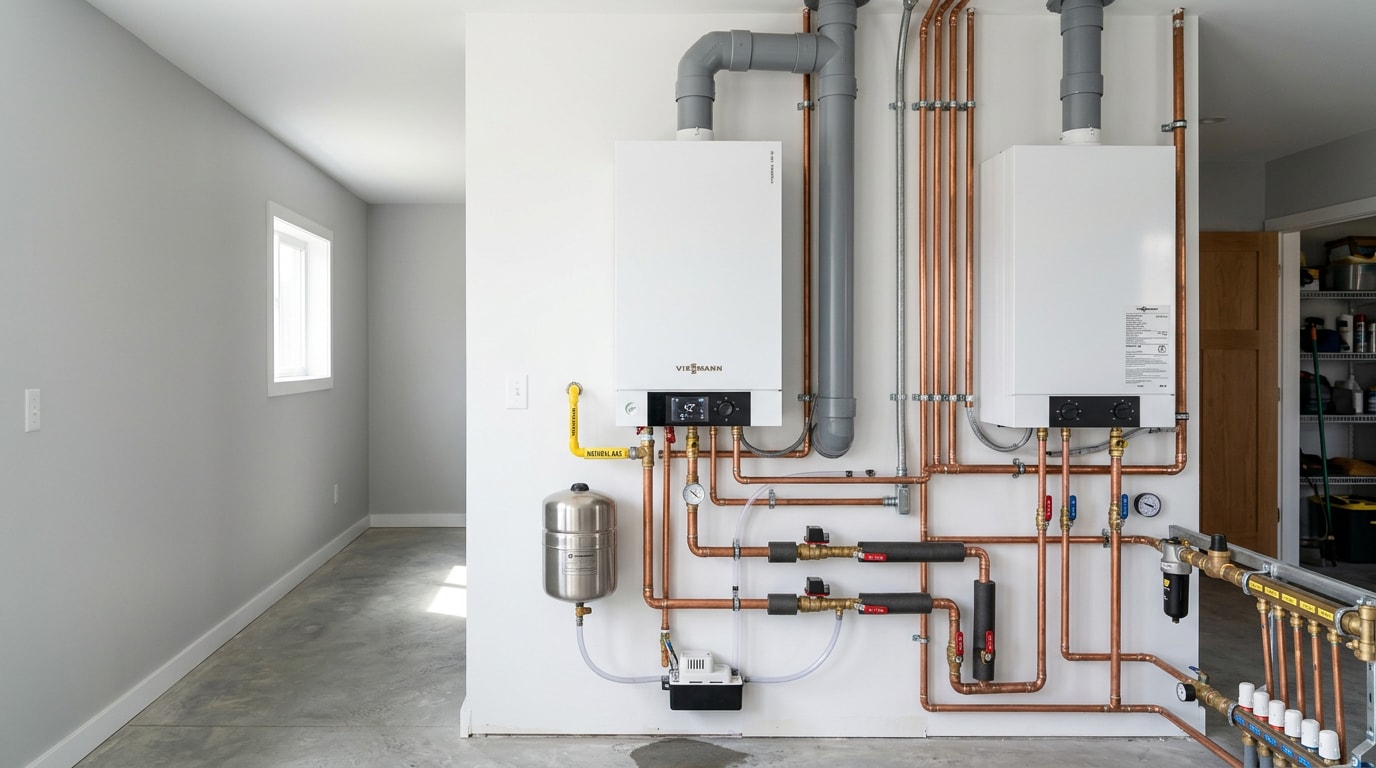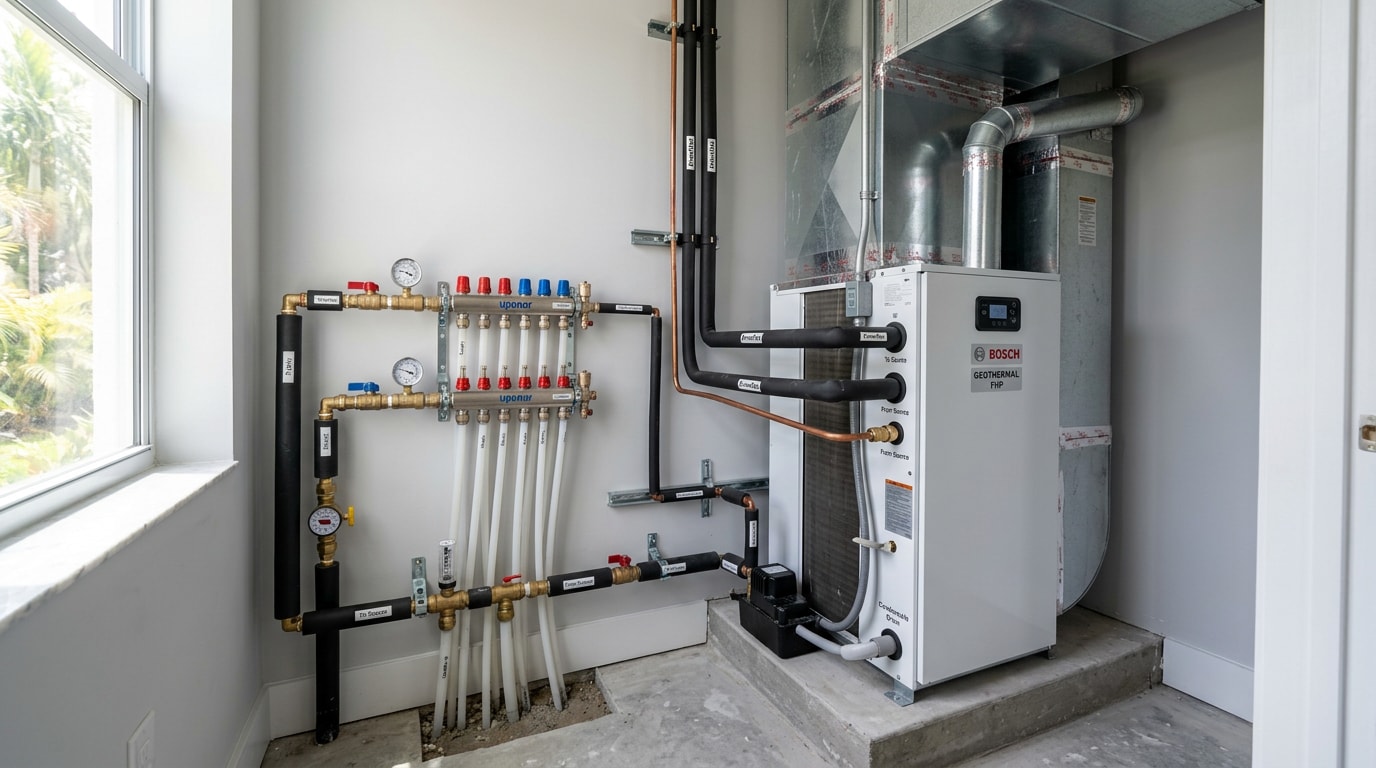
Geothermal air conditioning in Hallandale Beach, FL taps the earth's steady underground temperature instead of fighting South Florida's heat and humidity the way a standard condenser does. That difference can lower cooling costs for decades, but it also means confirming lot size, loop type, and a federal tax credit rule that changed heading into 2026 before anyone signs a contract. Here's what actually applies to a Hallandale Beach property today.
Geothermal vs. Traditional Heat Pumps: Why the Efficiency Gap Matters Here
Ground source heat pump COP values usually range from three to five, with some going higher depending on the system's design, ground conditions, and climate.
The U.S. Department of Energy has stated that geothermal heat pumps reach high efficiencies of 300% to 600%, based on COPs of 3 and 6 respectively. Standard air-source heat pumps don't get close to that range because they have to work against outdoor air temperature swings instead of a stable ground temperature.
Heat pumps transfer energy from outside the house to condition indoor space, but that process gets harder for air-source units when outdoor air is very hot or very cold, leading to less efficient operation and higher costs. Geothermal systems avoid this by relying on a constant ground temperature year-round. In a cooling-dominant market like Hallandale Beach, that stability works in the homeowner's favor nearly every month of the year.
How Geothermal Air Conditioning Works
Geothermal systems work differently than ordinary heating and cooling equipment. Conventional systems produce heat by burning fuel, while geothermal systems don't create heat at all, they collect and distribute it. A buried or submerged loop circulates water or refrigerant between the home and the ground, and a heat pump moves that heat where it's needed.
Heating Mode
The earth absorbs and stores nearly half of the sun's solar energy, so at a depth of six feet it holds a fairly constant 70 to 75 degrees Fahrenheit in Florida. A water-source heat pump taps that stored heat through the ground loop and delivers it indoors with very little electrical input.
Cooling Mode
In summer, the cycle reverses. Heat is pulled from the home, carried through the loop, and absorbed by the cooler ground or groundwater, keeping indoor temperatures steady. Because most of that heat transfer is passive, the homeowner is mainly paying for the electricity that runs the pump and compressor rather than the heat exchange itself.
Benefits of Geothermal AC for Hallandale Beach Homes
Three advantages matter most for coastal South Florida properties.
All-in-One Heating, Cooling, and Hot Water
A single heat pump can provide space heating, cooling, and supplemental hot water. Equipment comes in a range of sizes and configurations, so it can be matched to a condo-sized unit or a larger single-family home rather than forcing a one-size-fits-all install.
Safe, Fossil-Fuel-Free Operation
No combustion or open flame runs a geothermal heat pump. Heating and cooling happen without burning fuel, which removes the carbon monoxide and fire risks that come with furnace-based systems.
Lower Operating Costs With Real Efficiency Data Behind Them
Geothermal heat pumps are a highly efficient technology for heating, cooling, and water heating.
They typically use 40% to 70% less electricity compared to conventional heating and cooling systems.
The EPA estimates geothermal units reduce energy and carbon emissions by as much as 44% compared with air-source heat pumps and 72% compared to standard electric heating and cooling.
Here's what that looks like on an actual installation bill in 2026:
| System Capacity | Typical Cost Range (Installed) |
|---|---|
| 1 ton | $2,500 – $8,000 |
| 2 tons | $5,000 – $16,000 |
| 3 tons | $7,500 – $24,000 |
| 4 tons | $10,000 – $32,000 |
| 5 tons | $12,500 – $40,000 |
The national average cost for a geothermal heat pump installation in 2026 is $15,206, based on verified projects, with most homeowners paying between $4,541 and $26,537 per ton depending on system capacity, loop type, and site conditions. South Florida homes often land toward the higher end of that range because cooling loads here run larger for more of the year than in milder climates.
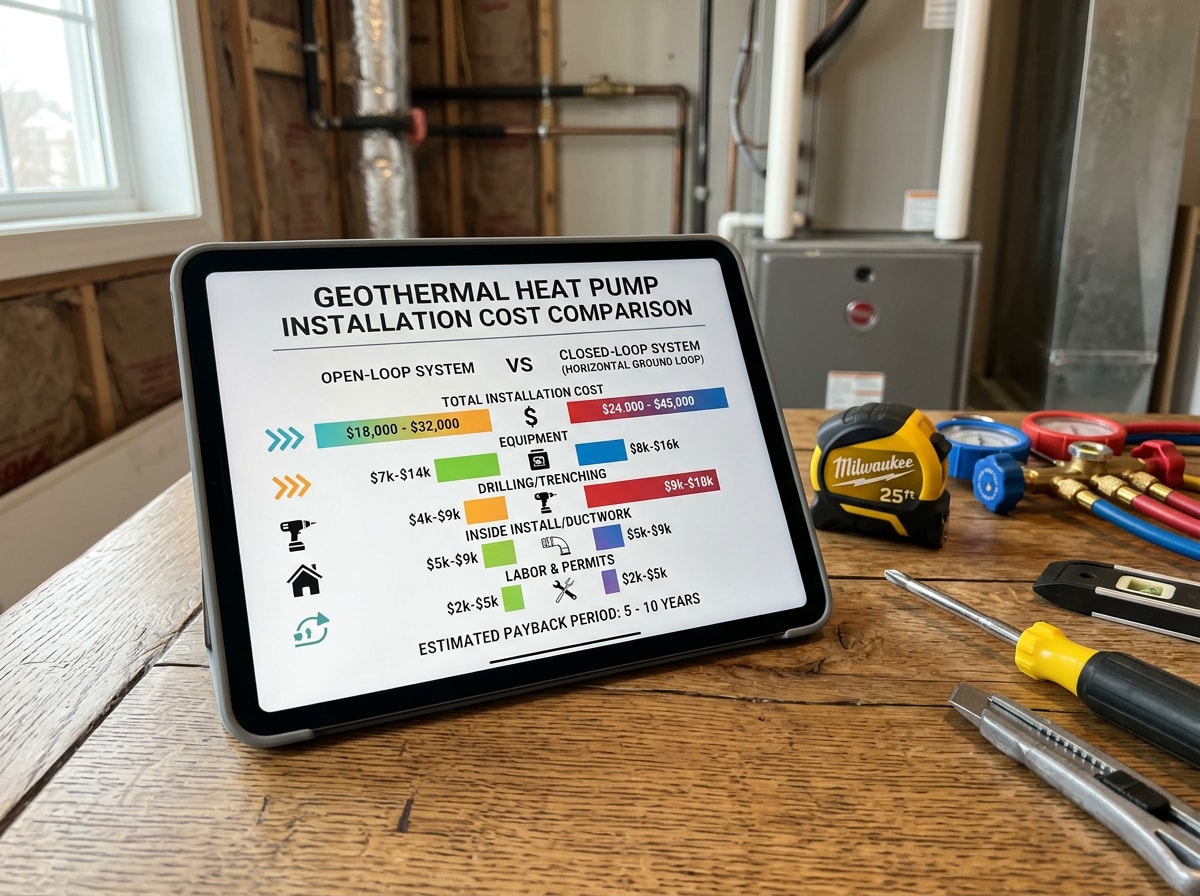
If the upfront number is the sticking point, a free estimate is the fastest way to see where a specific Hallandale Beach property actually falls on that range before committing to anything.
Types of Geothermal Loop Systems for South Florida Lots
A loop is the underground or underwater piping network that exchanges heat between the home and the earth. The right configuration depends heavily on lot size and water access, two factors that look very different in Hallandale Beach than in a rural market with acreage to spare.
| Loop Type | Best Fit | Space Needed |
|---|---|---|
| Pond loop | Canal-front or shared-pond communities | Access to a qualifying water body |
| Well water loop (open loop) | Smaller residential lots with adequate groundwater | Minimal surface footprint |
| Vertical loop | Dense lots without water access | Small footprint, deeper drilling |
| Horizontal loop | Larger rural lots | Roughly half an acre or more of usable yard |
Pond Loop
When a qualifying water body is available, the sealed piping loop can be submerged instead of buried underground. This closed-loop setup is less common on a typical Hallandale Beach residential lot, but it can work for canal-front properties or communities built around a shared pond.
Well Water Loop
Where groundwater is adequate, well water can be used directly as a heat source and sink. South Florida's high water table makes this open-loop approach genuinely practical for many smaller lots that couldn't support a horizontal trench field.
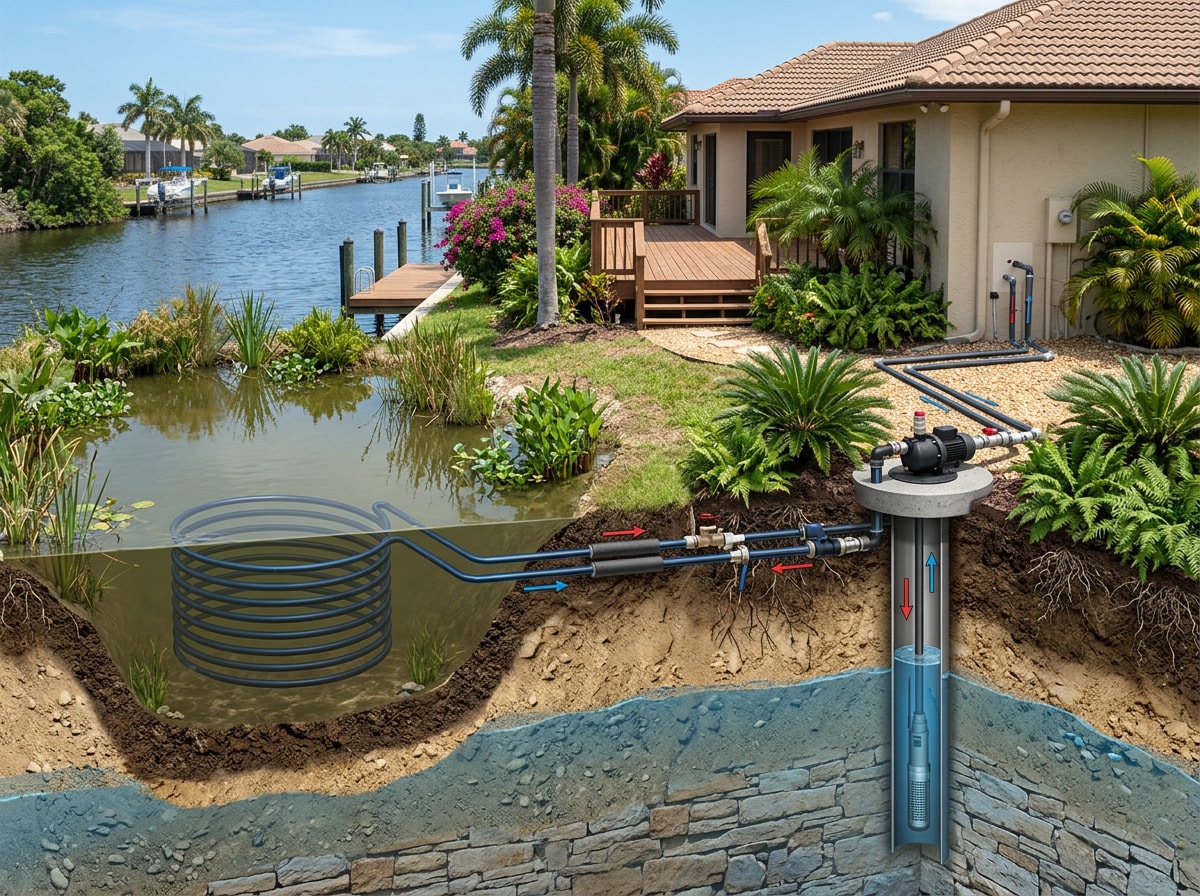
This groundwater exchange method is typically the most realistic option for Hallandale Beach properties, since horizontal trenching needs more usable land than most lots in the area provide. A custom mechanical design review can confirm which configuration actually fits a given lot before any digging starts.
2026 Tax Credit Update: What Changed for Geothermal Buyers
This is the part most geothermal content hasn't caught up on yet. For years, the federal Residential Clean Energy Credit covered 30% of a geothermal system's cost with no cap. That's no longer the case for new installs.
The Residential Clean Energy Credit equals 30% of qualified clean energy property costs installed from 2022 through December 31, 2025, and is not available for any property placed in service after December 31, 2025. In plain terms: a geothermal system completed and commissioned in 2026 does not qualify for that federal residential credit, even if the contract was signed in 2025.
What that means for planning purposes:
- Homeowners installing in 2026: the 30% federal residential credit no longer applies to the project.
- Homeowners who completed a system in 2025: the credit can still be claimed on that year's return, and any unused portion carries forward to offset future tax liability.
- HOAs, condo associations, and commercial-use properties: separate commercial energy credit rules apply and eligibility varies by project structure, so this is worth confirming with a tax professional before budgeting a community-wide install.
Given how common HOA and condo ownership is throughout Hallandale Beach, that commercial-versus-residential distinction isn't a minor footnote, it changes the entire payback calculation for a shared system. State rebates and utility programs may still apply regardless of the federal change, so it's worth checking current local offers before finalizing a budget.
Considerations Before Installing in Hallandale Beach
Lot size is the biggest constraint locally. A standard horizontal loop needs a meaningful amount of usable yard, which most Hallandale Beach residential lots simply don't have. That's exactly why vertical loops and well-water loops dominate the loop types covered above, not horizontal trenching.
A few other things worth confirming before signing a contract:
- Whether the property's groundwater depth and quality support an open-loop well system
- Whether local permitting requires a closed-loop design instead
- Whether existing ductwork can handle the new equipment or needs modification
- Whether the home's electrical panel has capacity for the heat pump and any backup components
An AC system replacement evaluation or a full mechanical system installation consultation can answer most of these before any site work begins.
Our Geothermal and Mechanical Services
Our licensed technicians at Orange State AC size and install ground-source and air-source systems across Broward and Palm Beach counties, and we've seen firsthand how differently an open-loop well system performs on a high-water-table South Florida lot compared to a vertical bore on a tighter property, which is exactly why a site-specific design matters more than a generic quote. Geothermal work generally falls into three categories: system design and installation tailored to the property, ongoing air conditioning maintenance to keep the system running at peak efficiency, and consultations that help homeowners decide whether geothermal makes sense for their situation. For homes still on conventional equipment, our air conditioning contractor services cover everything from standard installs to repairs while a geothermal decision gets made.
If a full geothermal retrofit isn't the right fit yet, a properly maintained conventional system can still close much of the efficiency gap. Our guide on AC tune-ups in Hallandale Beach covers what a seasonal checkup actually includes and what it costs in 2026.
Ready to find out what a geothermal or high-efficiency system would actually cost on a specific property? Get a free estimate and we'll walk through loop options, lot constraints, and realistic payback numbers together.
FAQ
Is a Geothermal Heat Pump Worth It in Florida?
For most Hallandale Beach homeowners, yes. Geothermal systems typically pay for themselves within 5 to 10 years through lower utility bills, and the long equipment life makes the math favorable even with the higher upfront cost. The math looks different for a 2026 install than it did a year ago now that the 30% federal residential credit has ended, so run the numbers with current costs, not older marketing figures.
How Much Does a Geothermal Heat Pump Cost in Florida?
Installation typically costs between $4,541 and $26,537 per ton of capacity , with South Florida systems often landing toward the higher end because larger homes and heavier cooling loads require bigger equipment and more extensive loop work.
Is the Federal Tax Credit for Geothermal Still Available in 2026?
No, not for residential systems placed in service after December 31, 2025. The credit is not available for any property placed in service after December 31, 2025. Systems completed in 2025 can still claim the 30% credit on that year's return, and unused amounts carry forward. Commercial and HOA-owned systems follow separate rules, so check with a tax professional for those cases.
How Long Do Geothermal Systems Last?
Loop fields often last 50 years or more, while indoor heat pump units typically run for around 20 to 25 years with proper maintenance. That longevity is a big part of why the upfront investment makes sense over time.
Can Geothermal Work on a Small Hallandale Beach Lot or Condo Property?
Usually yes, but not with a horizontal loop. Vertical loops and well-water loops both have a small surface footprint and are the realistic path for the area's denser lots, shared properties, and HOA communities.
Does Geothermal Air Conditioning Work in Florida's Hot, Humid Climate?
Yes. Stable underground temperatures let geothermal systems cool and heat efficiently year-round regardless of outdoor humidity swings. The ENERGY STAR website provides geothermal heat pump program requirements and efficiency criteria, and manufacturers meeting those requirements can display the ENERGY STAR label on complying models , which is a useful way to compare equipment before choosing a system for a coastal home.