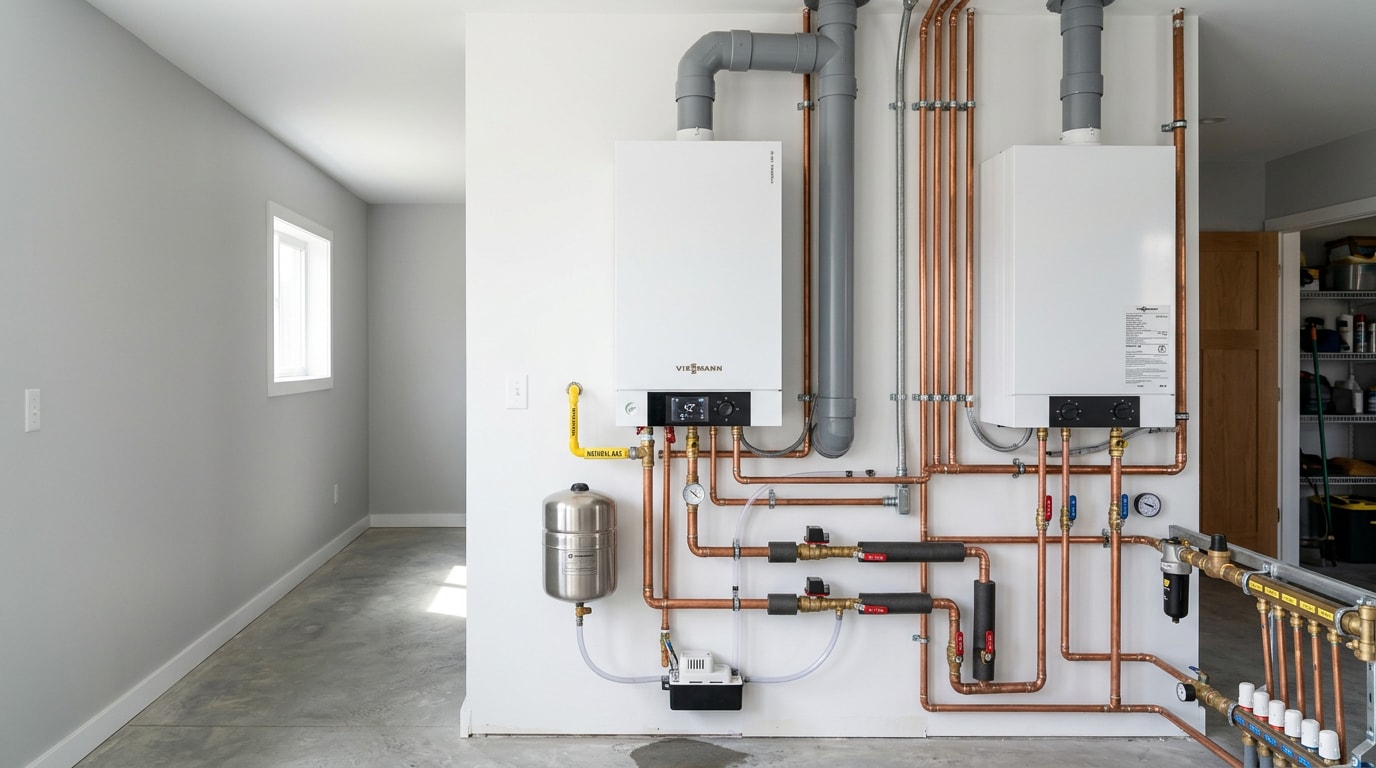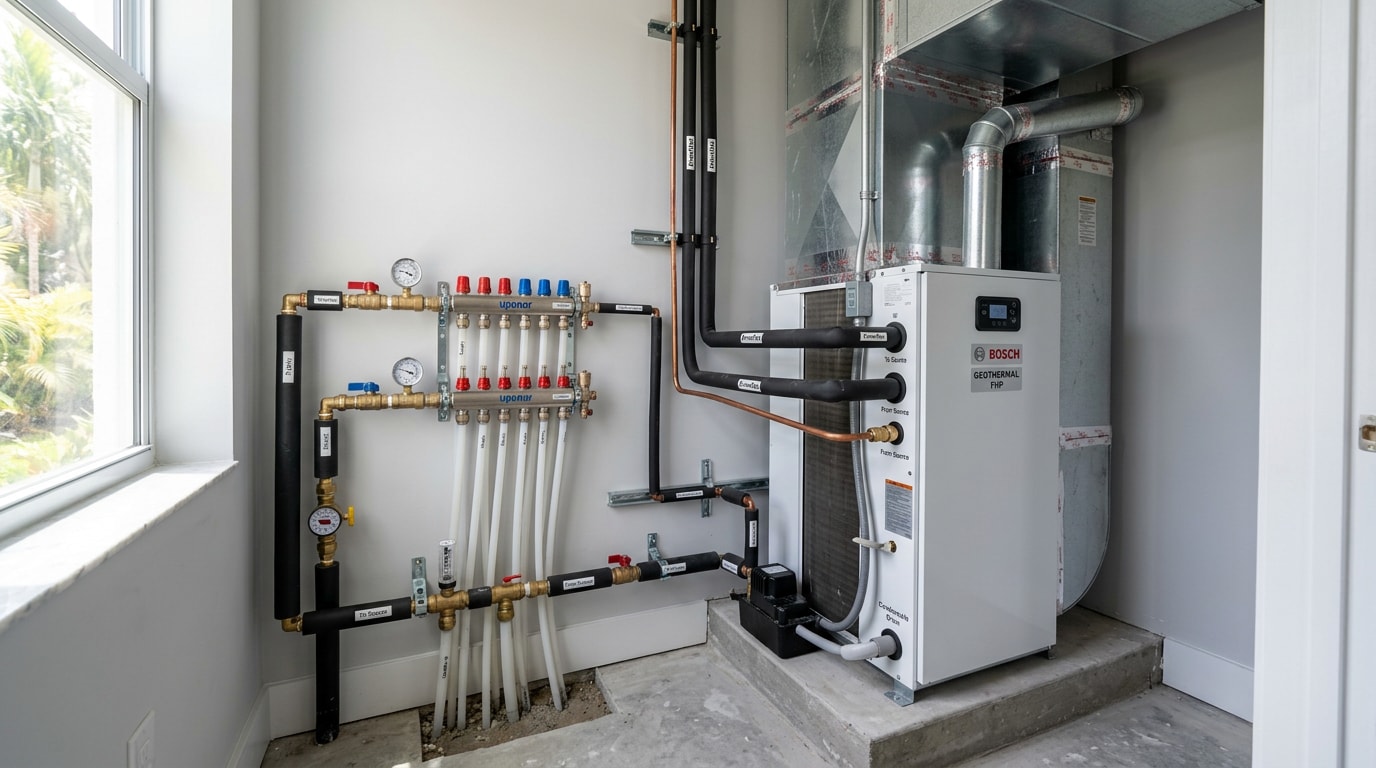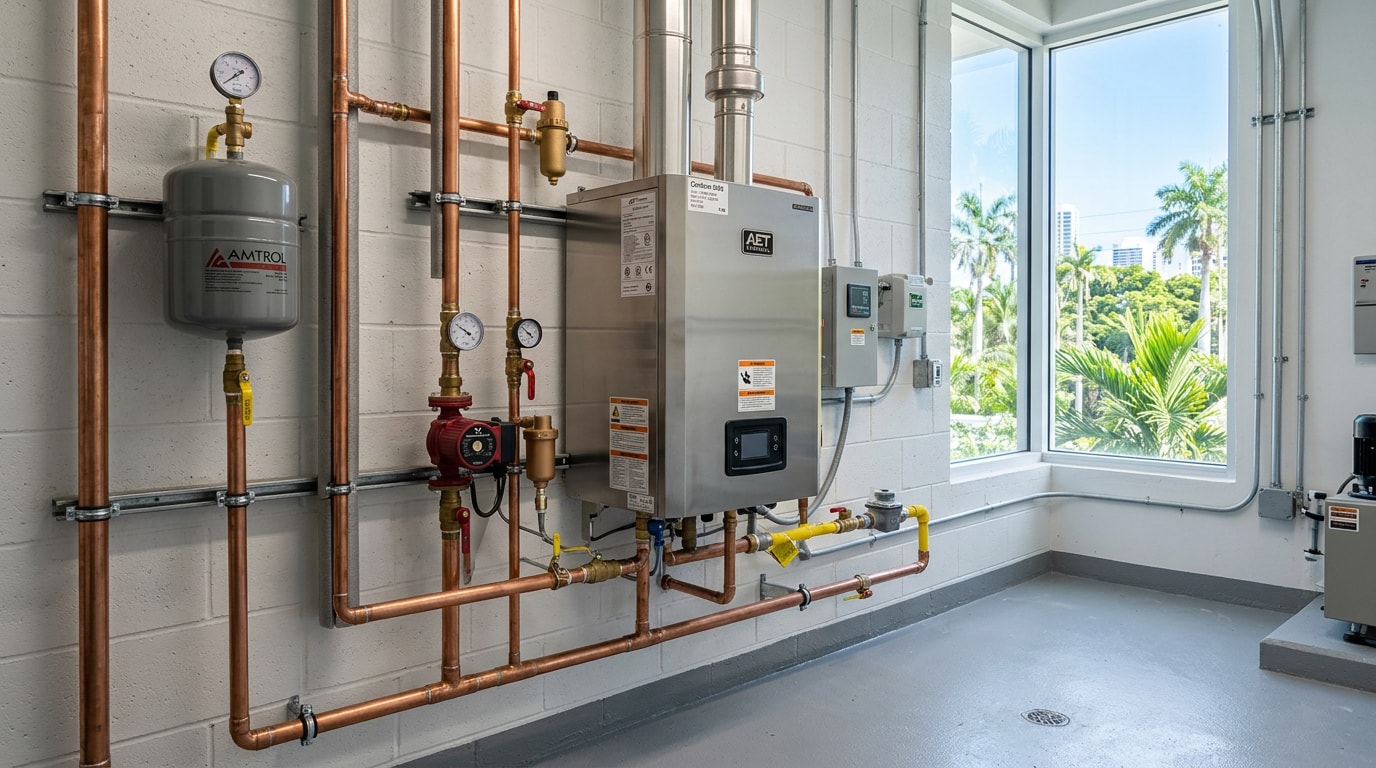
Boilers Miami, FL property owners depend on face a tougher environment than almost anywhere else in the country. If you're reading this, you've probably already noticed a warning sign or you're trying to get ahead of one before it turns into an emergency call. This guide covers how boilers work, the signs worth acting on, what a professional service call actually involves, and how to decide between repair and replacement before you pick up the phone.
What Is a Boiler and How Does It Work?
A boiler is a sealed heating appliance that burns gas, uses electricity, or draws on another energy source to heat water. The result is hot water or steam that circulates through pipes, radiators, or a building's hot water system. Unlike a furnace, a boiler heats liquid rather than air directly.
Boilers also differ from standard water heaters. A water heater simply stores and heats water for washing and drinking. A boiler usually powers space heating, radiant floor systems, or large-scale hot water demand in commercial buildings.
- Gas boilers burn natural gas or propane and generally carry high efficiency ratings, especially condensing models that capture and reuse heat from condensation instead of venting it outdoors.
- Electric boilers skip combustion entirely, so there's no venting or gas line to manage, though they typically cost more to run under Florida's electric rates.
- Both types serve residential or commercial hot water system needs, and the right choice depends on fuel availability, building size, and budget.
Why Boiler Service Matters in Miami's Climate
Miami doesn't put a boiler through the same test as Minneapolis or Denver. Year-round humidity speeds up corrosion, salt-laden air attacks exposed metal, and the region's hard water leaves mineral deposits inside pipes and heat exchangers. Together, those factors shorten service intervals for boilers across Miami, FL and can shorten a unit's working life if nobody is watching for it.
On service calls throughout Miami-Dade, the two failure points we see most often are ignition modules fouled by humidity and heat exchangers caked with scale from hard water. Neither shows up overnight. Both get expensive fast once they do.
Telltale Signs Your Boiler Needs Professional Attention
Warning signs worth acting on include:
- Rising energy bills with no change in usage
- Visible scale buildup or corrosion on fittings
- Rust-colored water coming from taps or radiators
- Banging, kettling, or whistling noises from the unit
- Inconsistent or wrong temperature readings
- A pilot light that won't stay lit
Corrosion inhibitors in the system's water help limit the damage from oxygen and dissolved gases, which matters even more here given how aggressively salt air attacks exposed metal. High-alkalinity water, common in parts of Miami-Dade, can also cause carryover and foaming that reduces steam quality and strains the whole system.
| Symptom | Likely Cause | Urgency |
|---|---|---|
| Rising energy bills | Scale buildup reducing efficiency | Moderate, schedule service soon |
| Rust-colored water or visible corrosion | Salt air damage, aging fittings | High, leak risk |
| Banging or "kettling" noises | Mineral scale on the heat exchanger | High, failure risk |
| Inconsistent or wrong temperatures | Thermostat or control malfunction | Moderate |
| Pilot light won't stay lit | Ignition or gas supply issue | High, safety concern |
If more than one of these shows up at once, it's worth scheduling a mechanical system repair visit rather than waiting it out.
What to Expect From a Professional Boiler Service Call
Whatever company you call, a professional boiler visit tends to follow the same basic sequence from initial assessment through a finished installation or repair. Knowing the stages ahead of time makes it easier to ask good questions.
Installation and Replacement
A proper installation starts with an on-site consultation and written estimate, followed by system sizing analysis to match the new unit to the building's actual hot water demand. For most replacement and new-install work, a permit is required before any work begins.
Miami-Dade County goes further than most jurisdictions on this point. Under county ordinance, a Certificate of Inspection must be obtained for any boiler with a heat input capacity of 200,000 BTU/h or more, a water temperature of 200°F, or a nominal water capacity of 120 gallons. A Certificate of Inspection for a high-pressure boiler shall be for a period of not more than six months, while a low-pressure boiler certificate runs for up to 12 months . Most residential and small commercial boilers fall under this threshold, but larger commercial systems in hotels, hospitals, and multifamily buildings often don't. It's worth confirming where your equipment lands before assuming a one-time install permit is all you need. You can review the full Miami-Dade County mechanical permit requirements directly.
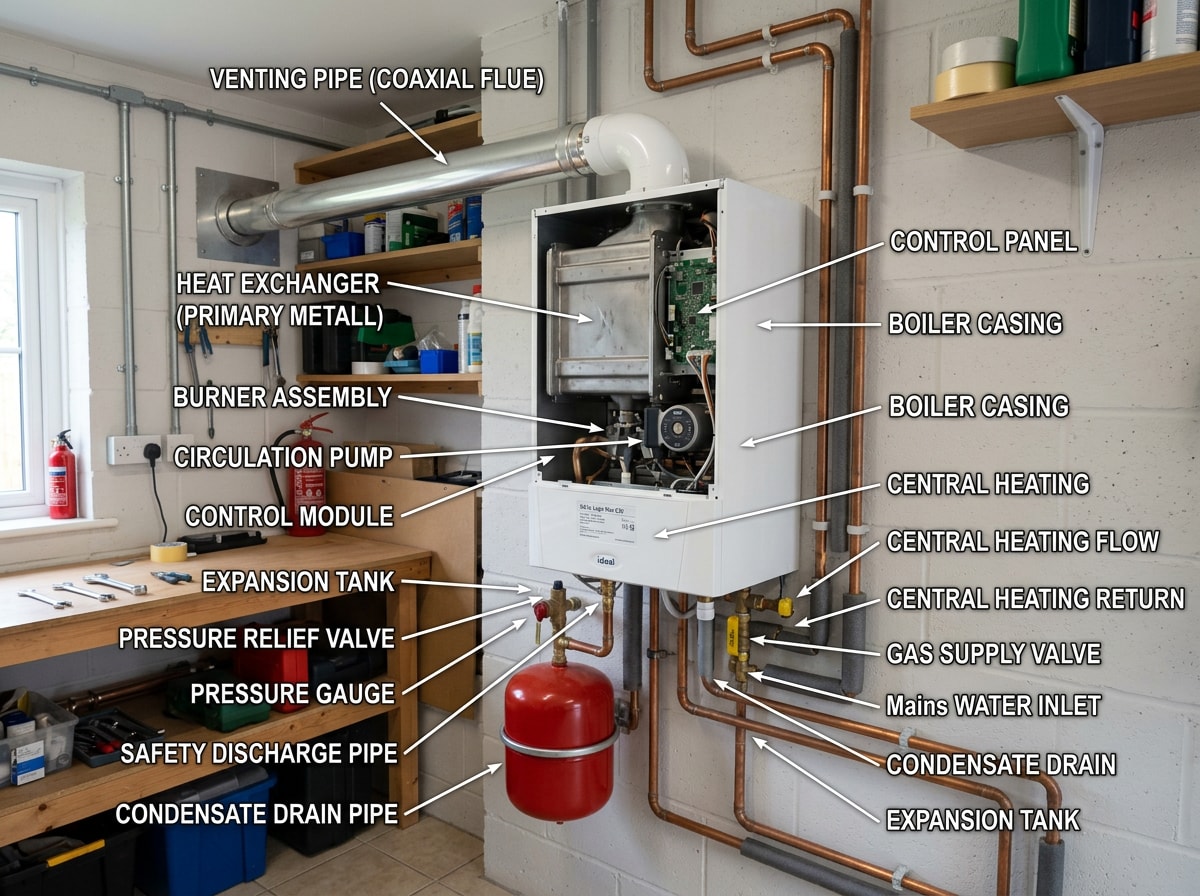
From there, technicians handle removal and responsible disposal of the old unit, then install the new system with every required connection: venting, gas piping or electrical hookups, an expansion tank, a pressure relief valve, and the controls that keep the system running safely. Commercial properties typically route through commercial mechanical construction, while single-family homes and smaller multifamily buildings fall under residential mechanical installation.
Repair
Not every call involves a full installation. Technicians who stock parts for major brands, including Weil-McLain, Burnham, Navien, Rinnai, Bosch, and Peerless, can often complete same-day repairs for common failures like ignition system replacement, pressure relief valve replacement, or a failed circulator pump. Browse mechanical system installation services for a closer look at what's included in a typical job.
Boiler Repair vs. Replacement: Which Makes Sense in Miami?
The general industry rule of thumb: if repair costs run more than 50% of replacement cost on a system over 12 years old, replacement usually makes more financial sense than another repair.
Repair is typically the right call when:
- The boiler is under 10 years old with one isolated component failure
- Repair cost comes in under 30% of full replacement cost
- The heat exchanger has been inspected and its integrity is confirmed sound
| Boiler Age | Symptom | Repair Cost (% of Replacement) | Recommendation |
|---|---|---|---|
| Under 10 years | Single component failure (pump, valve, igniter) | Under 30% | Repair |
| 10 to 12 years | Recurring minor issues | 30 to 50% | Repair, monitor closely |
| Over 12 years | Major component failure, leaks, or heat exchanger wear | Over 50% | Replace |
| Over 15 years | Multiple failures, climbing bills | Any | Replace |
Hard water and humidity shorten that safe repair window compared with drier climates. A 12-year-old boiler in Miami-Dade has usually absorbed more scale and corrosion than a same-age unit upstate, so leaning toward replacement a little earlier here is often the more realistic call. See the full mechanical contractor services overview for guidance specific to your equipment.
Factors That Affect Boiler Installation Costs
Several variables shape what a new boiler installation actually costs.
- System size. It needs to match the building's hot water demand. An oversized or undersized unit wastes money either way, which is why a proper load calculation through custom mechanical design matters more than a rough guess.
- Fuel type. Gas boilers run on either natural gas or propane, and which one a property has access to affects both equipment choice and installation complexity, especially in older buildings with outdated gas lines.
- Efficiency rating. A high-efficiency condensing boiler costs more upfront but captures and reuses heat from the condensation process instead of venting it away.
ENERGY STAR certified boilers have annual fuel utilization efficiency ratings of 87% or greater for oil boilers and 90% or greater for gas boilers, achieved through features like electronic ignition and sealed combustion . You can compare models directly through the ENERGY STAR boiler product guide.
- Labor. Jobs that involve rerouting venting or upgrading gas or electrical service to meet current code take longer and cost more.
How to Choose the Right Boiler Professional in Miami
Not every contractor advertising boiler work is equally qualified, and the stakes, gas lines, pressurized systems, carbon monoxide risk, are high enough that credentials matter more than the lowest quote.
Licensing and Credentials to Look For
A qualified contractor working on boilers in Miami, FL should hold a Florida Certified Plumbing Contractor (CPC) or Certified Mechanical Contractor (CMC) license at minimum, and depending on the scope of work, certifications such as ASSE 6010 for medical gas systems or ASSE 5110 for backflow prevention testing. You can verify any contractor's license status directly through the Florida DBPR license verification portal.
Local experience counts, too. A provider familiar with Miami's climate challenges, humidity, hard water, salt air, will size and specify equipment differently than one used to a drier market, and should already know Miami-Dade County's building codes well enough to keep every installation and repair compliant without extra back-and-forth.
Orange State A/C's technicians work across Miami-Dade and Broward on both the mechanical and air conditioning sides of a building's comfort system. If your property also runs a separate AC system that needs attention, our AC Unit Tune Up Miami Beach, FL guide breaks down what a seasonal tune-up should include and what it typically costs in 2026.
Ready to Get Ahead of a Boiler Problem?
A ten-minute inspection now is cheaper than an emergency call during a cold snap or a failed Certificate of Inspection renewal. Get a free estimate from a licensed Miami-Dade mechanical contractor and find out whether your boiler needs a repair, a replacement, or just a closer eye over the next year. You can also browse the full range of comfort system services on the Orange State A/C homepage.
FAQ
What Is the Typical Lifespan of a Commercial Boiler?
A commercial boiler's lifespan depends on the boiler type, maintenance history, installation quality, and local water conditions, but a well-maintained unit typically lasts 15 to 20 years. In Miami, hard water and humidity can push that number lower without consistent maintenance, which is one more reason annual service matters more here than in milder climates.
Is It Better to Repair or Replace a Boiler?
It depends mostly on age and repair cost. As a rule of thumb, a boiler under 10 years old with a single failed part is usually worth repairing, while a unit over 12 years old facing a repair bill above half the replacement cost is typically better replaced. See the comparison table above for a fuller breakdown by age, symptom, and cost.
How Often Should a Commercial Boiler Be Serviced in Miami?
Commercial boilers in Miami should get professional service at least once a year, ideally a full tune-up each spring with a shorter check-up in the fall. Miami's humidity and hard water accelerate scale buildup and corrosion compared to drier regions, so sticking to that rhythm catches small problems before they turn expensive.
Do I Need a Permit to Install or Replace a Boiler in Miami-Dade County?
Yes. Most boiler installation and replacement work requires a mechanical permit through Miami-Dade County or the local municipality's building department. Larger units also need a recurring Certificate of Inspection under county ordinance, separate from the initial install permit. Confirm your specific requirements through the county's mechanical permits page before work begins.
How Much Does Boiler Installation Cost in Miami?
Cost depends on system size, fuel type, efficiency rating, and labor complexity. A straight swap of a comparable unit costs less than a job that requires rerouting venting, upgrading gas lines, or bringing electrical service up to current code. A written, on-site estimate is the only reliable way to know the real number for your property. Request a free estimate to get a quote specific to your building.
Can a Florida Contractor's License Be Verified Before Hiring?
Yes. Florida's Department of Business and Professional Regulation maintains a free public lookup. Search the contractor's name or license number through the official DBPR verification tool to confirm the license is current and active before signing a contract.