An electric furnace not blowing hot air in Boca Raton, FL usually traces back to one of six fixable problems, even though South Florida's occasional cold snaps make a no-heat call feel urgent. The blower runs, air moves through the vents, and yet nothing feels warm. Work through the checks below in order and you'll likely find the cause before you ever need to pick up the phone.
Quick Diagnosis: Why Your Electric Furnace Isn't Blowing Hot Air
| Symptom | Likely Cause | DIY or Call a Pro? |
|---|---|---|
| Blower runs, no heat at all | Tripped breaker on the heating-element circuit | Check breaker yourself |
| Air is lukewarm, never fully hot | Dirty filter triggering a safety cutoff | DIY |
| Fan blows constantly, even between cycles | Thermostat fan set to ON instead of AUTO | DIY |
| Heat comes on, then stops partway | Failed sequencer stalling mid-stage | Call a pro |
| No heat, burning smell, or sparking | Burned-out heating element or wiring fault | Call a pro immediately |
| Weak, barely-there airflow | Blower motor or capacitor failing | Call a pro |
This guide walks through each cause in more detail below and tells you exactly when a licensed mechanical contractor in Boca Raton should take over.
How an Electric Furnace Creates Heat (and Where Things Go Wrong)
Understanding the basic sequence makes troubleshooting far less mysterious:
- The thermostat signals a call for heat.
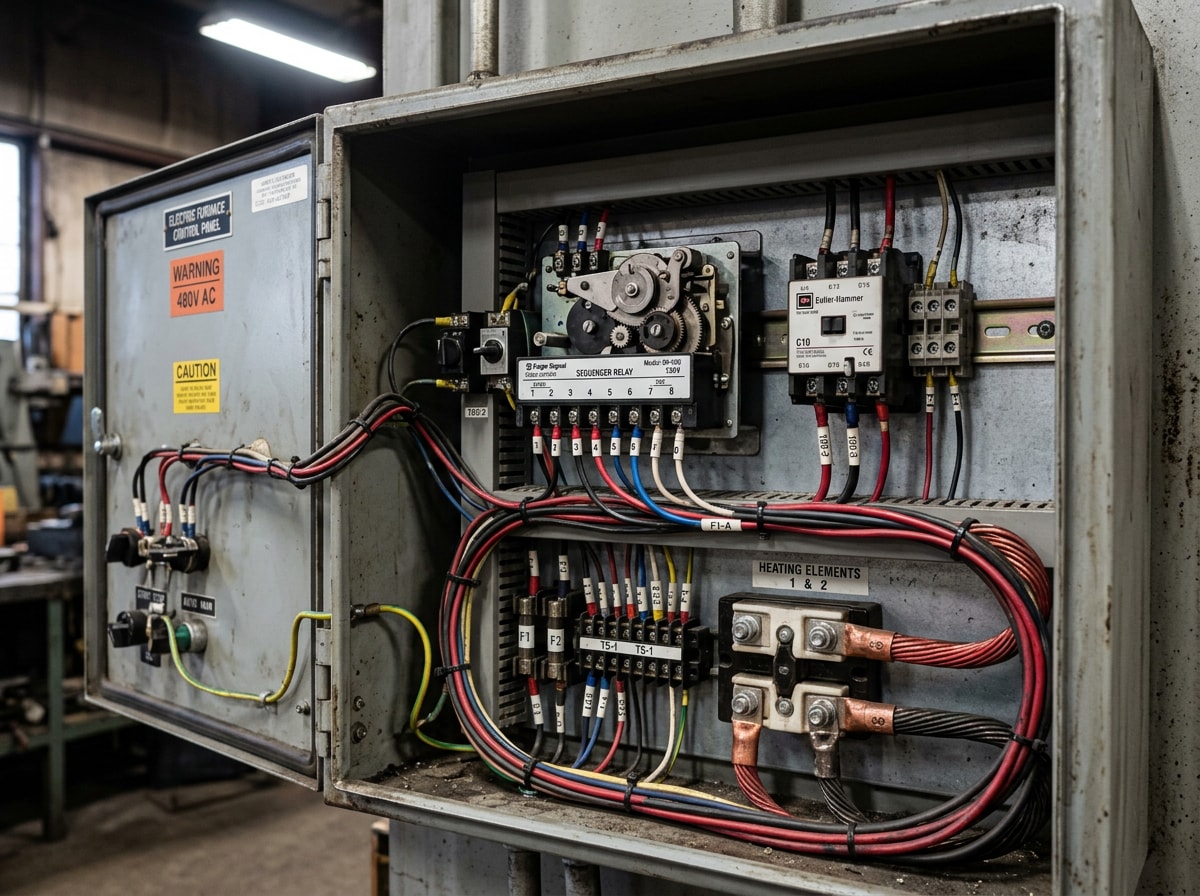
- A component called the sequencer receives that signal.
- The sequencer activates heating elements one at a time.
- The blower motor pushes warmed air through the ducts.
A breakdown anywhere in that chain produces the same symptom: the fan works fine, but nothing heats the air passing through it.
Why Staged Heating Matters
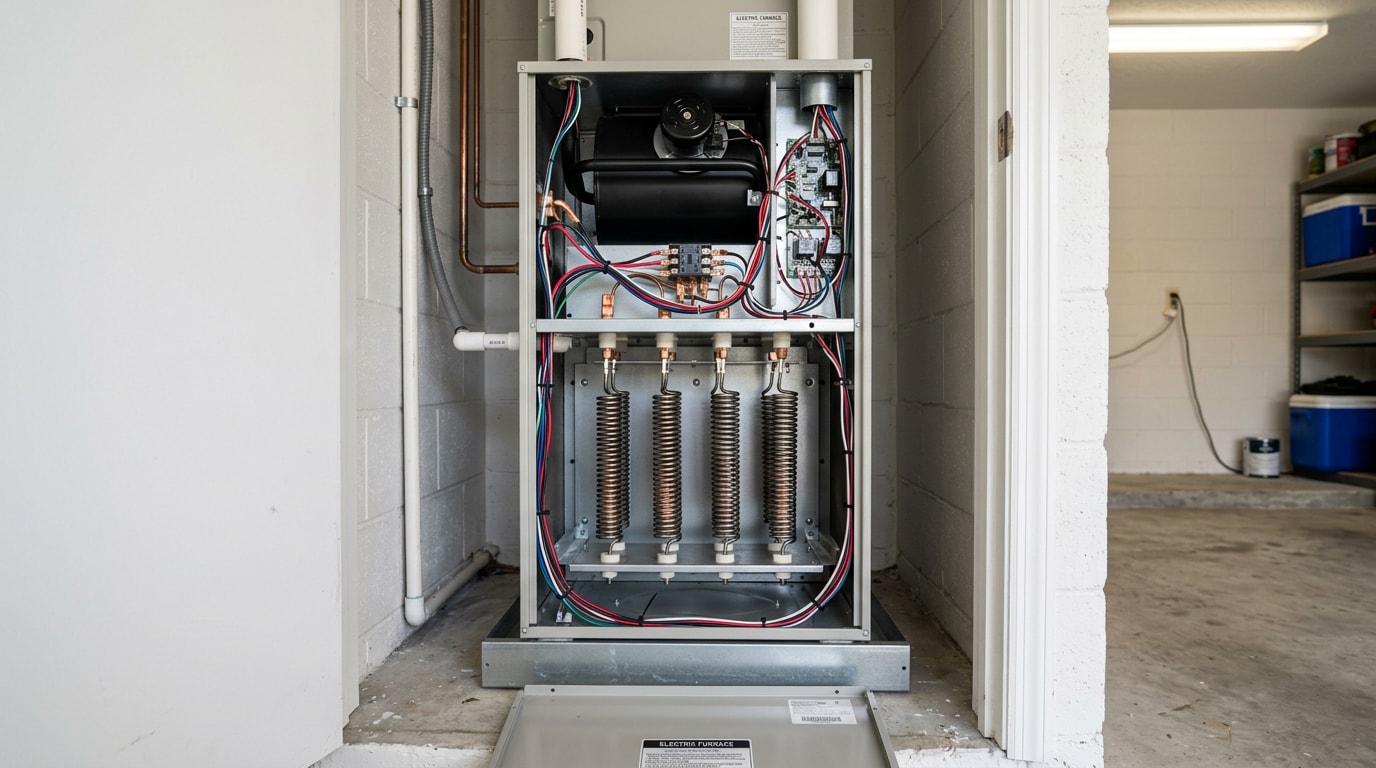
Electric furnaces can't safely energize every heating element at once. Blowers in electric furnaces move air over a stack of three to seven electric resistance coils, called elements, each of which are typically rated at five kilowatts. Running several of those elements simultaneously could pull well over 80 amps, more than most residential circuits are built to deliver instantly.
Instead, the sequencer brings elements online a few seconds apart. Older homes in South Florida sometimes still run smaller electrical panels, which makes this staged approach even more important, and more prone to producing lukewarm or delayed heat if the sequencer's timing drifts. This staged-heating design is also part of why electric furnaces are more expensive to operate than other electric resistance systems because of their duct heat losses and the extra energy required to distribute heated air through the home , which is one reason so many Boca Raton homes use them only as backup or supplemental heat rather than a primary system.
Safety First: Electrical Warning
Electric furnaces run on 240-volt circuits, roughly double the standard household outlet voltage, and that carries real risk. Beyond checking the filter or resetting a breaker, opening the cabinet or touching internal wiring without training is genuinely dangerous. Electric equipment must be free from recognized hazards that are likely to cause death or serious physical harm , which is the same standard OSHA applies to energized equipment in any workplace.
Before any hands-on troubleshooting, shut the system down safely:
- Set the thermostat to OFF.
- Flip the disconnect switch, typically located near or on the furnace cabinet.
- Switch off the dedicated breaker at the electrical panel.
Skipping these steps creates a real shock and fire risk.
Common Reasons Your Electric Furnace Isn't Blowing Hot Air
Here's the full checklist, ordered roughly from easiest DIY fix to professional-only repair.
1. Thermostat Issues or Incorrect Settings
Start here before touching anything else.
- Confirm the thermostat is set to HEAT, not COOL or OFF, since this gets bumped accidentally more often than homeowners expect.
- Check the fan setting. "ON" runs the blower continuously, even between heating cycles, which can feel like cold air blowing nonstop. Switch it to "AUTO."
- Swap the thermostat batteries, especially if the display looks dim or blank.
- Make sure the thermostat isn't mounted near a sunny window or an appliance throwing off ambient heat, which can throw off its reading.
2. Clogged Air Filter (Most Common Cause)
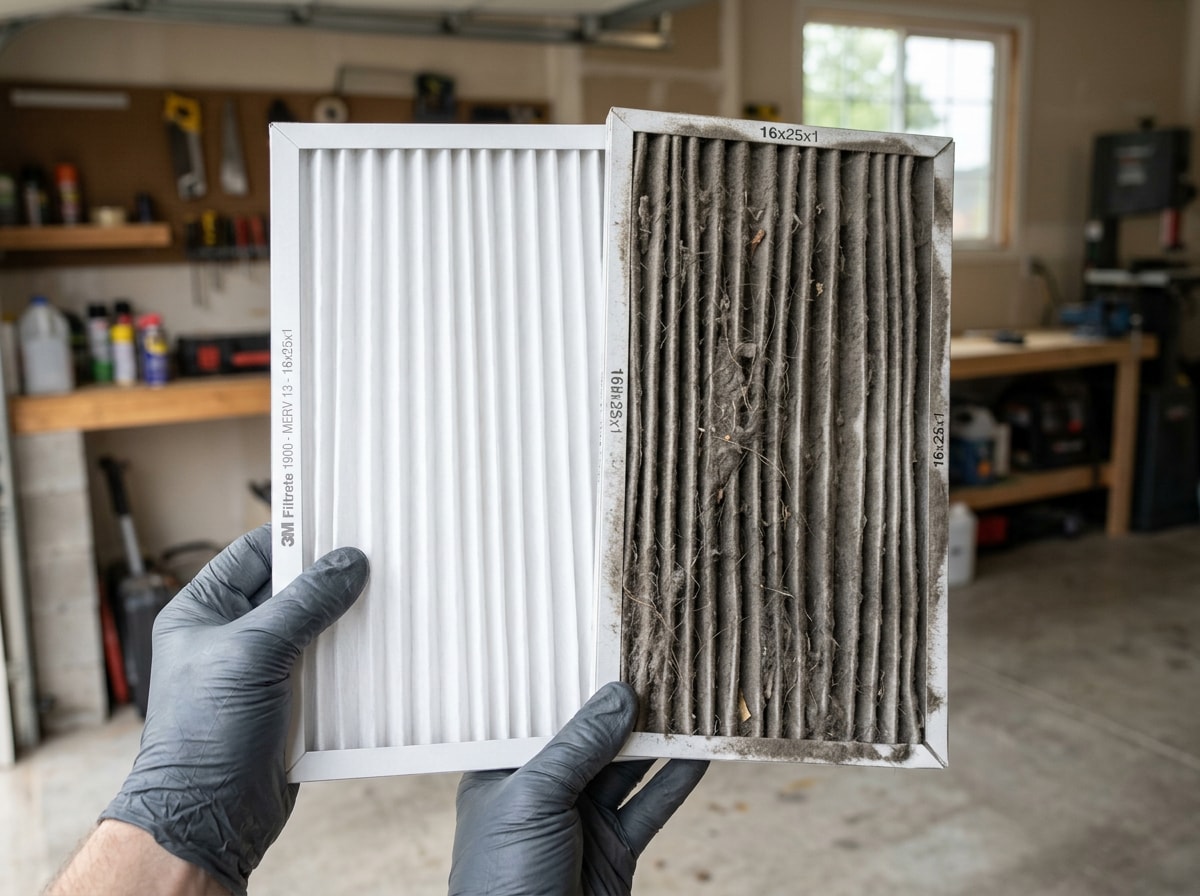
A dirty filter is the single most frequent reason an electric furnace runs but produces no heat, and it's almost always a simple homeowner fix. A dirty air filter will cause your heating and cooling system to work harder to distribute air throughout your home, which can increase energy costs and damage your equipment, leading to early failure. A clogged filter restricts airflow across the heating elements, causing them to overheat and trip a built-in safety switch before they ever warm the air passing through.
Check the filter monthly in Boca Raton's humid climate, and replace it if it looks gray, matted, or visibly clogged. If a fresh filter solves the problem, the high-limit switch likely tripped from heat buildup and simply needs a clean cycle to reset. If airflow still feels weak after a fresh filter, blocked return vents or leaky ductwork could be the real culprit. Our team can run a full ductwork inspection to rule that out.
3. Tripped Circuit Breaker or Power Supply Problems
Most electric furnaces run on two separate breakers: one for the blower motor, one for the heating elements. That setup explains the confusing "no heat but fan runs" scenario. The blower breaker stays on while the breaker for the elements has tripped.
Check the panel for a double-pole breaker sitting in the tripped or mid-position, and reset it once. Don't keep resetting a breaker that trips repeatedly. Call a qualified electrician if you have frequent problems with blowing fuses or tripping circuit breakers , according to the National Fire Protection Association. A breaker that trips more than once signals an underlying fault that needs professional diagnosis, not repeated resets.
4. Failed Heating Elements
Burned-out resistance coils are a common culprit. The blower keeps running normally, but one or more elements simply stop generating heat, often after years of cycling on and off.
Diagnosing burned-out coils requires testing for continuity with a multimeter on a de-energized circuit, which makes this a repair best left to a licensed technician. If you're already weighing a repair against replacing an aging furnace, our mechanical system repair team can walk you through both options.
5. Faulty Sequencer
A faulty sequencer fails to energize heating elements in the correct order, which can produce partial heat, delayed heat, or lukewarm air that never quite reaches a comfortable temperature. Sometimes it activates only the first stage and stalls there.
This component sits behind the furnace's access panel and involves wiring that should only be tested with the power fully disconnected, another case where professional diagnosis saves both time and risk.
6. Tripped High-Limit Switch
The high-limit switch exists purely for safety. It cuts power to the heating elements the moment internal temperatures climb too high, preventing an overheating furnace from becoming a fire risk. This switch tripping is doing exactly what it's designed to do.
The usual root cause is restricted airflow, most often from a dirty filter or blocked supply vents, so solving that upstream issue typically resolves the trips.
7. Blower Motor Problems
A struggling blower motor can produce weak airflow, a humming sound with no air movement, or intermittent operation tied to a failing capacitor. This shows up as a fan that isn't working properly, even when the thermostat calls correctly for heat.
Weak airflow from the blower itself is a mechanical and electrical diagnosis best handled by a technician with the right testing equipment.
Our Furnace Repair Process in Boca Raton
Electric furnaces are common in South Florida homes as supplemental or occasional heat rather than a primary heating source, which means many units sit unused for months at a time between cold fronts. In our experience servicing heating equipment across Palm Beach County, that intermittent use pattern is exactly why sequencer contacts and stiff blower components tend to act up the first cold week of the year, right when homeowners need heat the most.
A professional service visit typically includes a full diagnostic check of the thermostat signal, breaker status, sequencer timing, heating elements, and blower performance, followed by safety testing before the system is handed back to normal operation. If troubleshooting hasn't solved the problem, a mechanical contractor can pinpoint the exact failure point safely. We serve homeowners throughout Boca Raton, FL and the surrounding area.
If your furnace is old enough that repairs keep piling up, it's worth comparing the cost of another repair against residential mechanical installation for a new system. For a broader look at how other heating equipment works, our guide to boilers in Miami, FL covers a different type of system property owners sometimes compare electric furnaces against.
When to Call a Professional
Some fixes are safe for any homeowner; others cross into territory that requires a licensed HVAC technician.
Safe to try yourself:
- Replacing the air filter
- Checking thermostat mode, fan setting, and batteries
- Resetting a tripped breaker one time
Call a professional for:
- A breaker that trips repeatedly
- Any burning smell near the furnace
- Suspected sequencer or heating element failure
- No change after basic checks above
If any of these apply, stop troubleshooting and get a free estimate instead of guessing your way through parts one at a time.
FAQ
Why does cool air blow for a few minutes before it warms up?
This is normal. The blower often starts a few seconds before the heating elements fully energize during staged heating. It's only a concern if the air never warms up at all, which points to one of the causes covered above.
Why is my electric furnace blowing cold air?
This usually traces back to the thermostat fan setting, a failed sequencer, burned-out heating elements, or a tripped high-limit switch. Work through the checklist above in order to narrow it down.
Is it the thermostat or the furnace?
Check the thermostat first since it's the fastest thing to rule out. Confirm it's set to HEAT, the fan is on AUTO, and the batteries are fresh. If those checks don't fix it, the problem is almost certainly inside the furnace itself, most likely the filter, breaker, sequencer, or heating elements.
How do I reset my electric furnace after a breaker trips?
Switch the breaker fully to OFF, then back to ON. If the furnace runs normally afterward, you're done. If the breaker trips again immediately, stop resetting it and call a technician. Repeated tripping usually means a short or an overloaded circuit, not a simple fluke.
How long does it take for an electric furnace to heat up?
Electric furnaces generally feel slower to warm a room than gas systems because the sequencer brings heating elements online gradually instead of firing all at once. A much longer wait than usual, or air that stays lukewarm no matter how long it runs, points to one of the problems covered earlier in this guide. For personalized help, schedule a service visit with our team.
If your system needs more than a filter swap, visit our homepage to see the full range of heating, cooling, and mechanical services we provide across South Florida.
---
About the author: This guide was reviewed by the licensed HVAC technicians at Orange State AC, a mechanical, air conditioning, and sheet metal contractor serving Boca Raton and the surrounding South Florida area. For a diagnostic visit or a second opinion on a furnace repair quote, contact our team.